


Many people notice small, bright red spots on their skin and wonder whether they are normal or if they indicate some internal change.
These tiny spots, known as acquired capillary angiomas, are more common than they seem and often appear without warning. Although in most cases they do not pose a risk, understanding why they occur and what to watch for can help you take better care of your skin.
What are red spots on the skin, really?
Capillary angiomas are small clusters of very superficial blood vessels that become visible through the skin. They may appear as flat or slightly raised dots, with a bright red or cherry color.
A fact that surprises many people: they can remain unchanged for years or slowly appear without causing any physical discomfort.
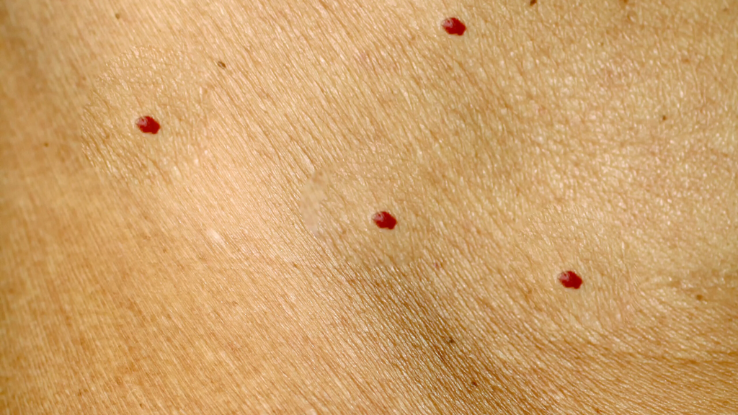
Why do they appear over time?
There is no single cause, but specialists have identified several factors that may influence their development. One of the main factors is age, as they tend to appear more frequently in adulthood.
Genetic predisposition also plays a role, as some families experience them more often. Cumulative sun exposure can make them more visible in certain areas.
Changes in the body, such as hormonal variations or minor skin injuries, may also be related, although there is not always a clear cause.
In the vast majority of cases, red spots are benign lesions that are not associated with general diseases. Even so, the skin can reflect changes, so it is important to pay attention to certain signs.
If you notice rapid growth of red spots, changes in color or shape, repeated bleeding without an apparent cause, or the sudden appearance of many new spots, a timely check with a healthcare specialist can provide reassurance and help rule out other skin conditions.
Although they cannot always be prevented, certain habits can help reduce their appearance, such as daily use of sunscreen—even on cloudy days—gentle and consistent hydration, avoiding excessive friction or repeated trauma, proper rest, and a balanced diet.
Red spots on the skin are common and, in most cases, harmless. Understanding them allows you to make better decisions about personal care.
If they cause concern, aesthetic discomfort, or show changes, an evaluation by a dermatologist is the best course of action.