


A day at the beach can seem completely ordinary until, all of a sudden, the lifeguards start running toward the shoreline, raise a purple flag, and ask everyone to stay out of the water.
That is exactly what happened at several beaches during the summer season, leaving hundreds of beachgoers confused.
Many assumed a shark had been spotted, while others thought a storm was approaching or that the water had become contaminated.
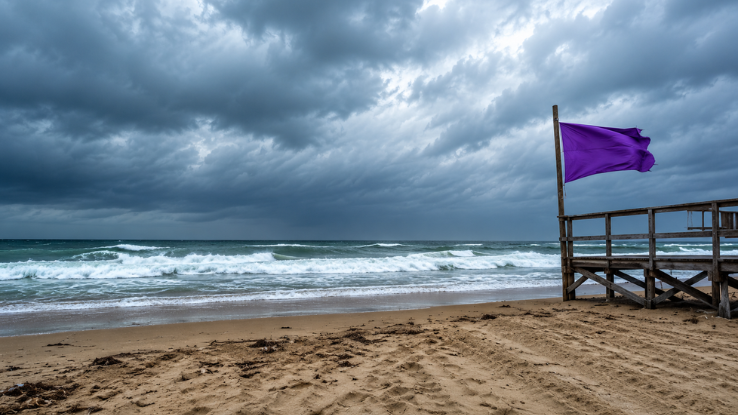
The explanation is usually very different, and knowing what it means could help you avoid an unpleasant situation on your next beach vacation. Most people believe the purple flag has only one meaning, but the reality is quite different.
Unlike the red flag, which means swimming is prohibited, or the yellow flag, which signals caution, the purple flag warns of potentially dangerous marine life in the area.
This does not necessarily mean that an animal is attacking people. Instead, it indicates that marine organisms capable of posing a risk to swimmers have been detected.
That is precisely why lifeguards respond so quickly. Their goal is to prevent accidents before they happen. The animals most commonly responsible for this warning include:
Jellyfish.
Portuguese man o' war.
Stingrays hidden beneath the sand.
Sea urchins.
Venomous fish.
Other marine animals that may cause injuries upon contact.
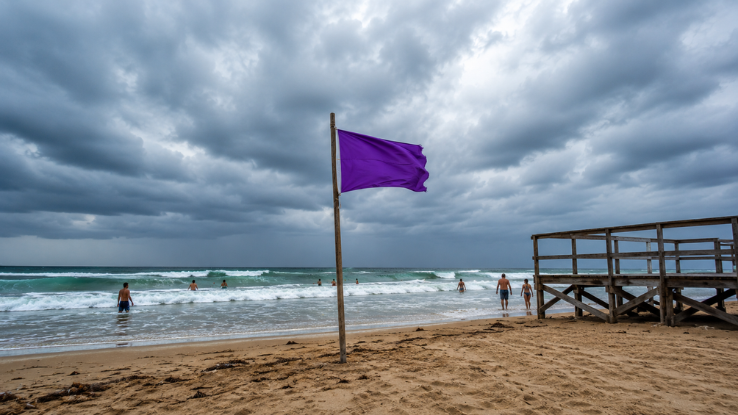
In many cases, these animals go completely unnoticed by beachgoers, especially when the water appears calm.
Why do lifeguards react so quickly?
Many people are surprised to see several lifeguards running at the same time. The reason is simple: once dangerous marine life has been confirmed, their priority is to warn swimmers before anyone gets hurt.
The mistake many people make when they see a purple flag
One of the most common mistakes is assuming that because the ocean looks calm, there is no danger. In reality, many of these marine animals are difficult to spot.
Jellyfish can drift with the currents, stingrays often remain partially buried beneath the sand, and some venomous fish blend into their surroundings almost perfectly.
Does a purple flag mean swimming is prohibited?
Not always. At many beaches, the purple flag serves as a cautionary warning, while at others, local authorities may temporarily advise people to stay out of the water depending on the type of marine hazard that has been detected.
The most important thing is to follow the instructions given by the lifeguards, who continuously monitor changing ocean conditions.
What should you do if you see a purple flag?
If you notice a purple flag during your visit to the beach, the safest approach is to follow the lifeguards' instructions, avoid entering the water until you understand the reason for the warning, and never touch jellyfish or other marine animals, even if they appear to be dead.
The next time you visit the beach, take a few seconds to check the warning flags before heading into the water. That simple habit can help you enjoy the ocean more safely and avoid an experience no one wants to have while on vacation.