


Finding a centipede inside your home can be unsettling for many people. Its elongated shape, numerous legs, and quick movements often trigger an immediate reaction of surprise or discomfort.
However, from a biological and environmental perspective, the presence of a centipede in the home usually has very clear explanations related to natural balance, moisture, and the presence of other insects.
Far from being just an unpleasant visitor, this small creature can reveal important information about the condition of your home.
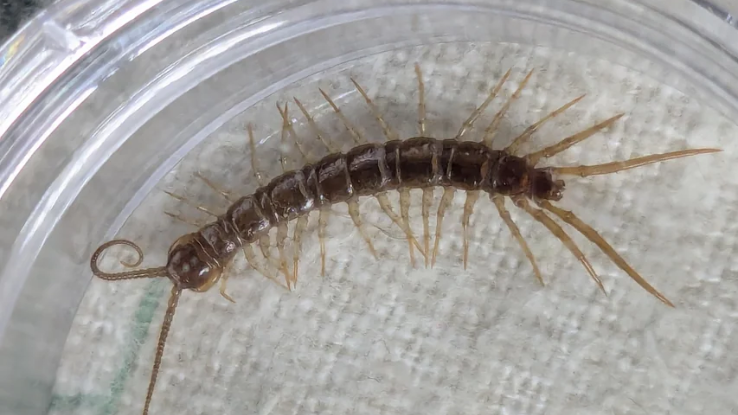
What a centipede really is
Centipedes belong to the group of myriapods, a class of arthropods that includes animals with many body segments and numerous legs.
Unlike millipedes, centipedes are natural predators. This means they feed on other small insects and arthropods that may live inside homes.
Their common prey includes small cockroaches, spiders, insect larvae, termites, ants, silverfish, among others.
For this reason, some pest control specialists consider that the centipede can act as a natural biological controller within the home.
Although centipede bites are not common, they can occur if the animal feels threatened or is handled directly. Centipedes have small structures called forcipules, which act like pincers used to inject venom to immobilize their prey.
Why a centipede enters a house
There are several reasons why these animals may appear indoors. The most common are related to specific environmental conditions. 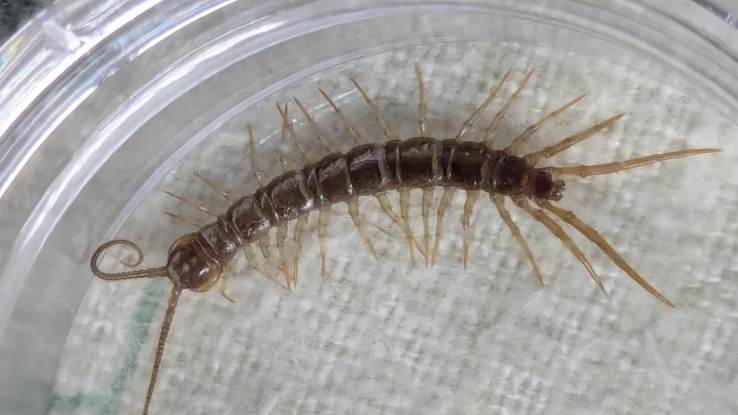
1. Moisture in the environment
Centipedes prefer humid and dark places, as their bodies need to retain a certain level of moisture to survive.
That’s why they are often found in areas such as bathrooms, basements, kitchens, near pipes, behind furniture, or in cracks. If they appear frequently, it may be a sign of excess moisture in the home.
2. Presence of other insects
Since they are predators, centipedes tend to settle where there is a food source. This means their presence could indicate that there are also other small insects in the house that may go unnoticed.
In a way, the centipede acts as a natural indicator of the home’s ecosystem.
3. Climate changes
During rainy seasons or extreme temperatures, many insects seek shelter indoors. Cracks in walls, windows, or doors can serve as entry points.
Are centipedes dangerous to humans?
In most cases, they do not pose a risk to humans. Some species have small venomous pincers used to immobilize their prey, but bites to humans are rare and usually cause only mild irritation.
Experts recommend avoiding direct handling and removing them using simple methods such as trapping them with a container, using gloves, and improving ventilation in the area.
What the presence of a centipede may indicate about your home
Although finding a centipede does not necessarily mean your home is dirty, it can indicate certain environmental factors such as moisture buildup, presence of small insects, cracks or entry points, and poorly ventilated areas.
For this reason, pest control specialists suggest checking aspects such as sealing cracks in walls or windows, reducing humidity through proper ventilation, and maintaining cleanliness in dark or less-used areas.
In nature, centipedes play a very important role within the ecosystem. They act as predators that regulate insect populations, helping maintain balance in natural environments as well as urban spaces.
For this reason, some scientists consider that their occasional presence in a home may simply be part of the interaction between the household and the natural environment.
Although their appearance may be unsettling, the presence of a centipede in the home almost always has very simple environmental and biological explanations.
Understanding these details allows us to see these animals from a more scientific perspective—not as a strange mystery, but as a sign of the natural balance that also exists within our homes.